

What Digital Sovereignty Actually Means for Everyday People
A New Way to Move Through the Internet

Digital sovereignty is one of those words that sounds like it belongs in a history textbook or a United Nations resolution. It conjures images of borders, treaties, declarations of independence—power exercised at the scale of nations and governments. It’s not a word most people would associate with their Instagram account or their morning scroll through email.
But maybe it should be.
Right now we are operating within tech systems that are architecturally designed to extract value from our attention, our behavior, and our creative patterns.
Digital sovereignty is the idea that you get to decide what you give, what you keep, and on what terms you participate in your online world. And while that concept has historically lived in conversations about governments and corporations and geopolitics, it might be the most important framework any of us—especially those of us who live and work online—can adopt right now.
Where the Word Comes From
The geopolitical definition was easy to find. But there’s a deeper one that important to share the significance behind “sovereignty” when we use it in the digital context.
Long before data privacy was a policy conversation, indigenous communities around the world were fighting for something much more fundamental: the right to govern their own knowledge, their own land, their own futures. And data was part of that fight from the beginning. As the Native Nations Institute documents, colonial governments collected detailed records about indigenous populations while excluding those same communities from controlling or even accessing the information gathered about them. The suppression of indigenous knowledge systems was part and parcel of colonization — and the Indigenous Data Sovereignty movement that has gained momentum in recent decades is a direct continuation of that longer fight for self-determination, extended into the digital realm.
The OCAP® Principles — Ownership, Control, Access, and Possession — were established in 1998 by First Nations leadership in Canada, asserting that a community’s data belongs to the community. In 2007, UNDRIP affirmed indigenous rights to collective self-determination. And in 2019, the Global Indigenous Data Alliance introduced the CARE Principles — Collective Benefit, Authority to Control, Responsibility, and Ethics — positioning data not as a neutral resource to be extracted, but as something inseparable from the people it comes from.
Sovereignty goes beyond walls or borders. It’s about stewardship. A living practice of knowing what’s yours, understanding its value, and choosing how it moves through the world.
That’s the version that applies to our digital lives.
What Digital Sovereignty Actually Looks Like for the Every Day User
So what does it mean to practice sovereignty online—not as a nation, not as a corporation, but as a person?
It starts with a shift in how you see yourself within the system.
Most of us have been trained to think of ourselves as users. We “use” platforms. We “consume” content. The language itself positions us as passive recipients of someone else’s infrastructure. Digital sovereignty begins the moment you start seeing yourself as a participant and key player—someone who brings value to the ecosystem, who generates data and creative energy and cultural signal, and who has every right to make intentional choices about how that value flows.
From there, it becomes a set of daily, practical decisions.
It’s knowing what you’re giving away. Not just in the abstract — “they have my data” — but specifically. Which apps have access to your location, your contacts, your microphone? What permissions did you grant three years ago and never revisited? What behavioral profile is being built from your patterns, and who’s buying it? Most of us have never looked. Sovereignty says: look.
It’s choosing your infrastructure with intention. The tools you use to run your life and your business are not neutral. Every platform has an incentive structure, a data policy, a relationship with advertising and with law enforcement. Sovereignty doesn’t mean you have to use only open-source software and host your own email server. It means you choose your tools with your eyes open—understanding the trade-offs rather than defaulting to whatever everyone else is using.
This is the core of what George Siosi Samuels calls Conscious Stack Design™ — treating your tech stack as a living system that either supports or undermines your ability to think clearly and build intentionally.
It’s owning your domain—literally and figuratively. If your entire professional presence lives on rented land—a social platform that can change its algorithm, its terms, or its ownership overnight—you don’t have sovereignty. Period. Building on platforms you own, maintaining direct relationships with your audience, and keeping a copy of your own creative work aren’t paranoid moves. They’re sovereign ones.
It’s understanding that opting out isn’t the only option. The dominant narrative around digital privacy still tends to frame agency as withdrawal —delete the app, go off-grid, “just log off.” For anyone whose livelihood exists online, that’s not a solution. It’s a fantasy. Sovereignty isn’t about leaving the internet. It’s about being in it differently. With awareness. With boundaries. With a clear sense of what you’re building and who it’s actually for.
The Conscious Stack Design™ framework is a methodology for aligning your digital tools with your values and cognitive health. It’s a game-changing approach for individuals AND enterprises, a tangible way to practice digital sovereignty. I’m partnered with George to turn this method into a movement and building the community of practitioners around this work. More on this here.
Why This Matters More Right Now Than Ever
The infrastructure for real data rights is being built. California just launched a first-of-its-kind platform that lets residents request deletion of their personal information from every registered data broker with a single click. New legislation is emerging around algorithmic transparency and AI training data.
At the same time, public awareness is surging. The backlash to Ring’s Super Bowl ad depicting an AI-powered neighborhood camera network and drew immediate comparisons to mass surveillance was driven by regular people who watched a 30-second commercial and said no. The QuitGPT movement, where hundreds of thousands of people are canceling their ChatGPT subscriptions over political and ethical concerns, isn’t an industry protest. It’s a consumer one.
People are activated. They feel, in their bodies, that something about the current arrangement isn’t right. That the value exchange is off. That the systems they depend on are taking more than they’re giving back.
What’s missing is the framework. Most people know what they’re against — surveillance, manipulation, loss of control. Fewer have a clear picture of what they’re fighting for. Digital sovereignty is that picture.
Most people know what they’re against — surveillance, manipulation, loss of control. Fewer have a clear picture of what they’re fighting for. Digital sovereignty is that picture.
It’s the affirmative vision on the other side of the critique. Not just “protect yourself” but “know your value, exercise your agency, and build with intention.”
Putting Power Into Practice
practice—the same way health and wellness is a practice. You build habits. You make choices. Some days you’re more intentional than others, but overall, you know which direction you’re moving and why.
For creators and entrepreneurs especially, this practice is inseparable from the work itself. Every decision about where you publish, how you build your audience, what tools you use, and what terms you accept is a sovereignty decision. You can design your digital life with intention.
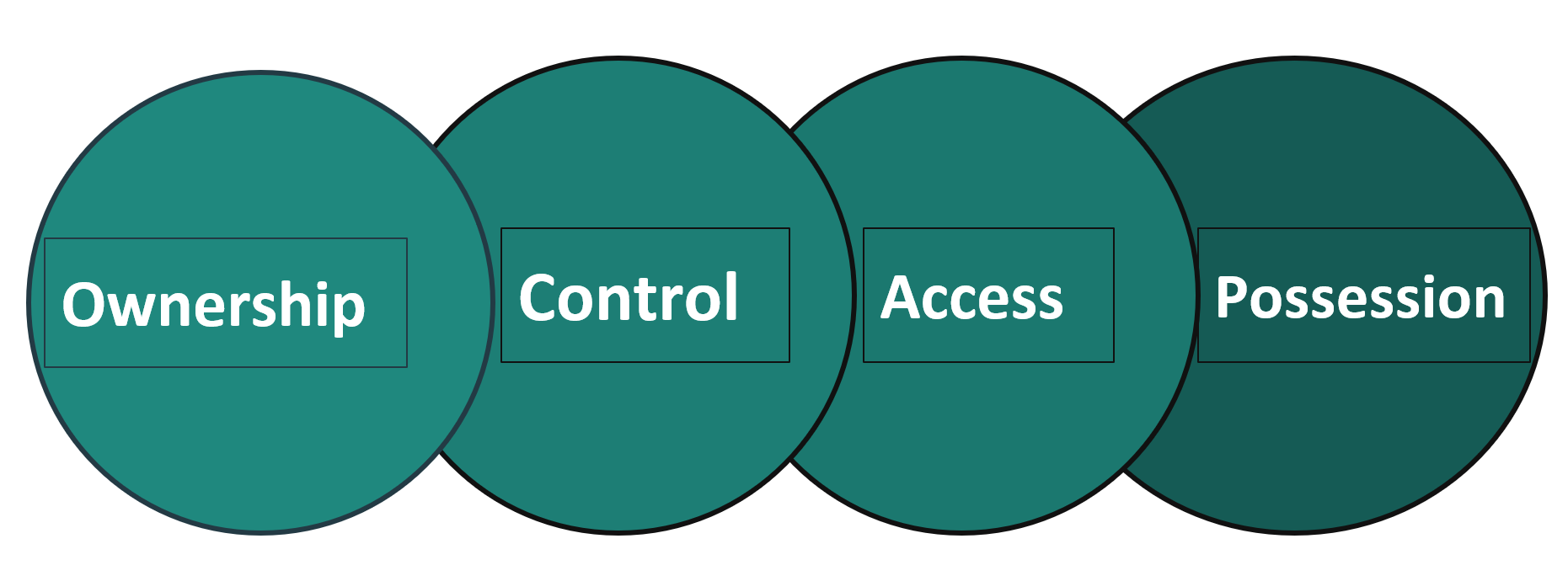
The OCAP® framework offers a useful lens here, even outside its original indigenous context: Ownership — do you own your creative output, your audience relationships, your data? Control — do you have a say in how your information is collected, used, shared? Access — can you actually see and retrieve the data that’s been collected about you? Possession — is your most important work stored somewhere you control? We answer these questions with every tool we adopt and every platform we build on.
The internet doesn’t have to feel like something that’s happening to you. It can be something you move through with clarity, with purpose, and with a real understanding of what you’re building and what it costs.
That’s what sovereignty feels like at the individual level. A way of being online that starts with the understanding that your attention, your patterns, and your creative energy are yours—and how they move through the world should be your decision.
This is the first in a series on digital sovereignty for people who live and work online. Next: what “owning your stack” actually means in practice — and why it starts with the tools you choose.
More from George Siosi Samuels on Digital Sovereignty & Conscious Stack Design:
Callie Rojewski is the founder of Online & IRL, a creative studio and community exploring digital culture and the future of building online. She writes about the intersection of technology, creativity, and intentional digital life.